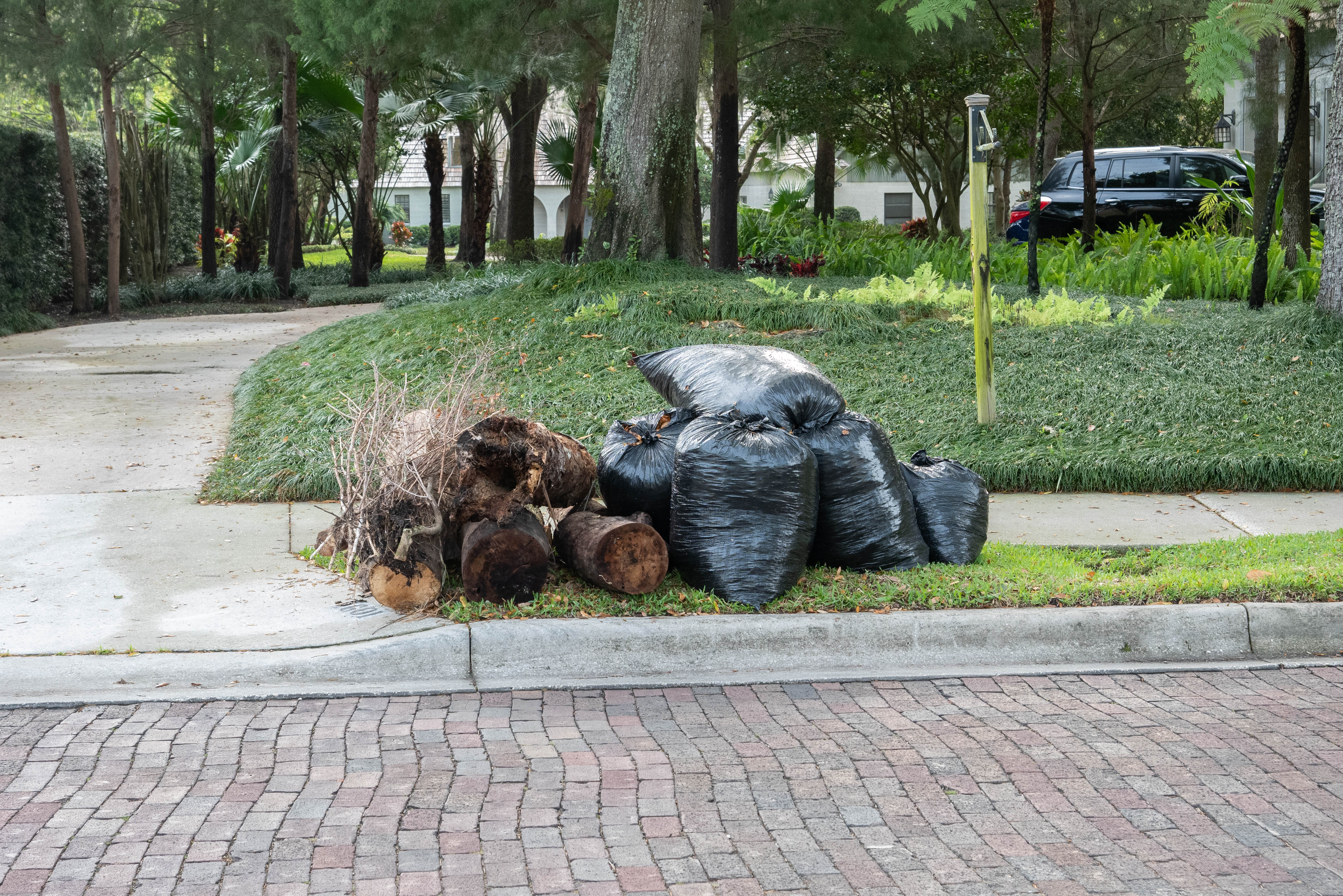
As we enter another hurricane season, the City of Orlando Solid Waste Division wants to make sure you are equipped with the tips necessary to ensure your safety.
As we prepare for hurricane season, the City of Orlando Solid Waste Division would like residents to remember the following tips:
- Please refrain from performing major yard work prior to a named storm. Excess yard waste increases the burden on our crews and we cannot guarantee removal before storm force winds arrive.
- Please do not stack yard waste at the curb. If it has not been removed by city crews before the storm, store it against your home. Yard waste at the curb can wash into storm drains and cause localized flooding.
- We will continue to pick up garbage until it is no longer safe for crews to be on the road. Residents will be notified via social media if garbage service is suspended. Local news outlets may also share this information.
- After the storm, city crews will be focusing on debris that is bagged or bundled in four-foot sections. Duct tape and twine work well for bundling yard waste. The city has limited equipment to pick up large piles. Large piles will be removed by contractors when available.
- When bringing debris to the curb, look around you. Avoid piling under utility lines or tree limbs.
- Don’t stack next to trees, utility poles, fire hydrants, mailboxes or on storm drains or water meters. We ask that residents are patient with debris removal. Residents may contact the Solid Waste Division at 407.246.2314 or swcustomersvc@orlando.gov.
Debris contractors from out of town must follow FEMA guidelines and are not permitted to collect debris in gated communities or on private streets.
- Solid Waste will continue to collect garbage and recycling until it is no longer safe for our crews. After the event, make-up days will be scheduled and information will be shared via social media, the city webpage and local news outlets.
- Do not stack yard waste on the curb. If it has not been removed by crews prior to the storm than we recommend storing it against your home. Yard waste left at the curb can wash into storm drains and cause flooding.
- If you have any questions leading up to storm, please do not hesitate to contact our customer service line at 407.246.2314 or swcustomersvc@orlando.gov.
- Prior to the storm, open the entrance gates so residents/members may freely go in and out of the property. This is a precaution if your neighborhood loses power and is not able to manually open its gates.
- Prepare to bag and bundle debris and bring it to the curb in front of your home for city crews to remove. Large, unbundled piles will have to wait for a city claw truck and will take longer to remove.
- Share your storm debris plan with your neighbors.
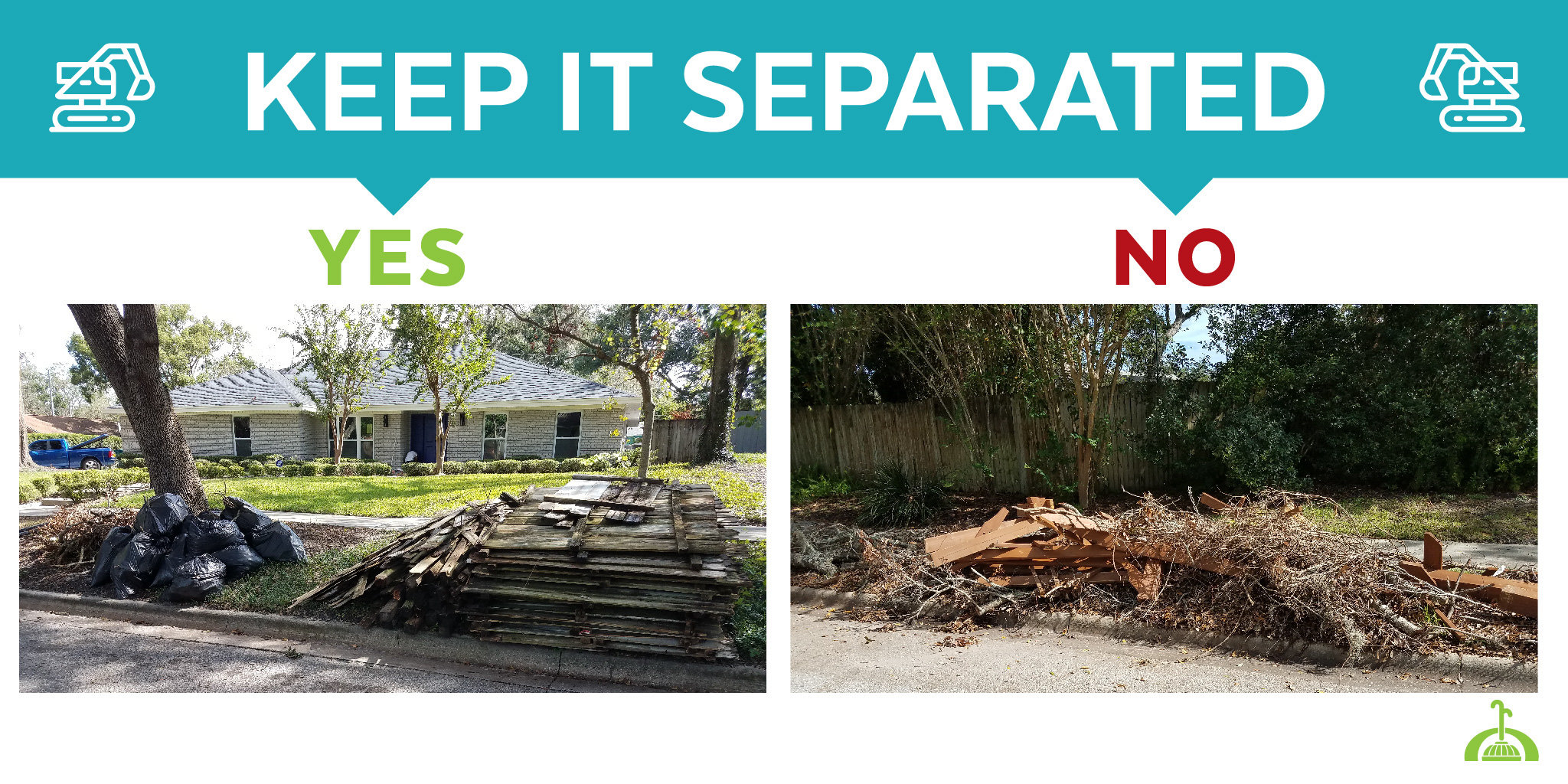
If possible, bag and bundle your yard waste so it can be collected by our yard waste crews and claw trucks.
Different debris types should be organized into separate piles at the curb, not on streets or blocking sidewalks. It is very important that you separate vegetative debris (tree limbs and yard waste) from building materials like fencing and construction items. These materials are disposed of at different locations.
| Waste Categories |
Items |
| Normal Household Trash |
Normal household garbage. recyclables and bagged/bundled yard waste will be collected on your regular collection day. Find your garbage, recycling and yard waste collection days. |
| Household Hazardous Waste |
- Cleaning supplies
- Batteries
- Lawn chemicals
- Oils
- Pesticides
- Oil-based paints and stains
- Pool chemicals
- Varnishes
- Solvents
|
| Vegetative Debris |
- Logs
- Plants
- Tree branches
|
| Electronic Waste |
- Computers Radios
- Stereos
- Televisions
- Other devices
|
| Construction and Demolition Debris |
- Building materials
- Gypsum wallboard
- Floor/window coverings
- Carpet
- Drywall
- Lumber
- Furniture
- Mattresses
- Plumbing
- Glass
- Metal
- Tile
- Fencing
|
| Appliances and White Goods |
- Air conditioners
- Dishwashers
- Freezers
- Refrigerators
- Stoves
- Washers and dryers
- Water heaters
- Heat pumps
|
- Bring debris to the curb in front of your home for city crews to remove. It is very helpful if customers can bag or bundle as much of the debris as possible because they can be collected by both the city’s manual yard waste crews and claw trucks. This doubles the number of staff that can assist your community with restoration. Duct tape and twine work well for bundling yard waste. For a complete list of City of Orlando yard waste rules, visit orlando.gov/yardwaste.
- When bringing debris to the curb, look around you. Avoid piling under utility lines or tree limbs. Don’t stack next to trees, utility poles, fire hydrants, mailboxes or on storm drains or water meters.
- Keep it separated – vegetative storm debris (tree limbs, branches, and other organic debris) should always be separated from construction debris (shingles, fencing, pressure-treated wood, drywall, etc.)
For more information, contact City of Orlando Solid Waste at swcustomersvc@orlando.gov or 407.246.2314
Keep in mind:
- Place all storm debris curbside. Debris placed between the sidewalk and your home will not be picked up.
- Do not stack or lean. Placing debris near or on trees, poles, mailboxes, fire hydrants, utility boxes or other structures makes removal difficult.
- Unsure where to pace debris? If you don't have a sidewalk in front of your house, place storm debris at the edge of your property closest to the curb. Do not block the roadway or storm drains.
Businesses are responsible to remove their own debris. City of Orlando Solid Waste can assist for a charge once residential clean-up is complete. Debris piled in the right-of-way in front of a business will not be collected after the storm. Special arrangements will need to be made.
- Why are different trucks picking up different items?
- In the event of a big storm, the city may use debris removal contractors to assist with the clean-up efforts. These contractors work under a different set of guidelines, which requires them to collect and record certain materials. Separating your items at the curb ensures that your material will be collected in a timely manner.
- Who do I contact about damaged trees in the right-of-way?
- If you are concerned about trees or brush that are blocking sidewalks or streets as a result of an event, notify the solid waste office at 407.246.2314 or swcustomersvc@orlando.gov.